

Managing Performance in a Hybrid Workplace

When organizations first adopted remote and hybrid work arrangements, many leaders worried about one thing: productivity. Would employees remain engaged? Would collaboration suffer? Could managers effectively supervise teams they couldn’t see every day? Several years later, the conversation has evolved. The question is no longer whether hybrid work can be successful – many organizations have proven that it can. The real challenge is how to manage employee performance effectively in a workplace where some employees are in the office, others work remotely, and many split their time between both. The End of “Management by Visibility” For decades, managers often relied on visibility as an indicator of performance. Employees who arrived early, stayed late, attended every meeting, and were regularly seen in the office were often perceived as high performers. In a hybrid environment, that approach no longer works. Employees who spend more time in the office may naturally receive more face time with leaders, while remote employees may have fewer opportunities for informal interactions. If managers are not careful, this can create unconscious bias in performance evaluations and career development opportunities. The most effective organizations are shifting their focus from activity and presence to measurable outcomes and results. Set Clear Expectations One of the biggest performance management mistakes in hybrid workplaces is assuming employees understand what success looks like. Managers should ensure that employees clearly understand: When expectations are clearly defined, employees are better positioned to perform successfully regardless of where they work. Schedule Regular Check-Ins Hybrid work requires more intentional communication. Managers should establish regular one-on-one meetings to discuss: These conversations should focus on performance, support, and growth rather than simply tracking activity. Employees who feel connected to their manager are more likely to remain engaged and productive. Measure What Matters Many organizations collect significant amounts of workplace data. However, not all metrics are meaningful. Rather than focusing on online status, response times, or hours logged into systems, organizations should identify performance indicators that align with business objectives. Examples may include: Effective performance management focuses on outcomes rather than monitoring employee behaviour. Address Performance Issues Early Hybrid work can sometimes make performance concerns less visible. Missed deadlines, communication challenges, declining quality, or reduced engagement may take longer to identify when employees are not physically present in the office every day. Managers should address concerns promptly and document performance discussions appropriately. Early intervention often prevents minor issues from becoming significant performance problems. A consistent performance management process helps ensure fairness and accountability across the organization. Don’t Forget Employee Development One of the unintended consequences of hybrid work is that learning opportunities can become less visible. In-office employees may have more opportunities to participate in informal mentoring, observe leaders, and build relationships across the organization. Organizations should make a conscious effort to ensure remote and hybrid employees have equal access to: Performance management should not focus solely on current results—it should also support future growth. Looking Ahead Hybrid work is no longer a temporary workplace trend. For many organizations, it has become a permanent part of how work gets done. The most successful employers recognize that effective performance management is not about monitoring where employees work. It is about creating clarity, accountability, communication, and trust. By focusing on results rather than presence, organizations can build high-performing teams that thrive regardless of location. Written by: Gaelle Le Rhun, HR Associate
Data-Driven HR: How People Analytics Is Transforming Turnover and Performance
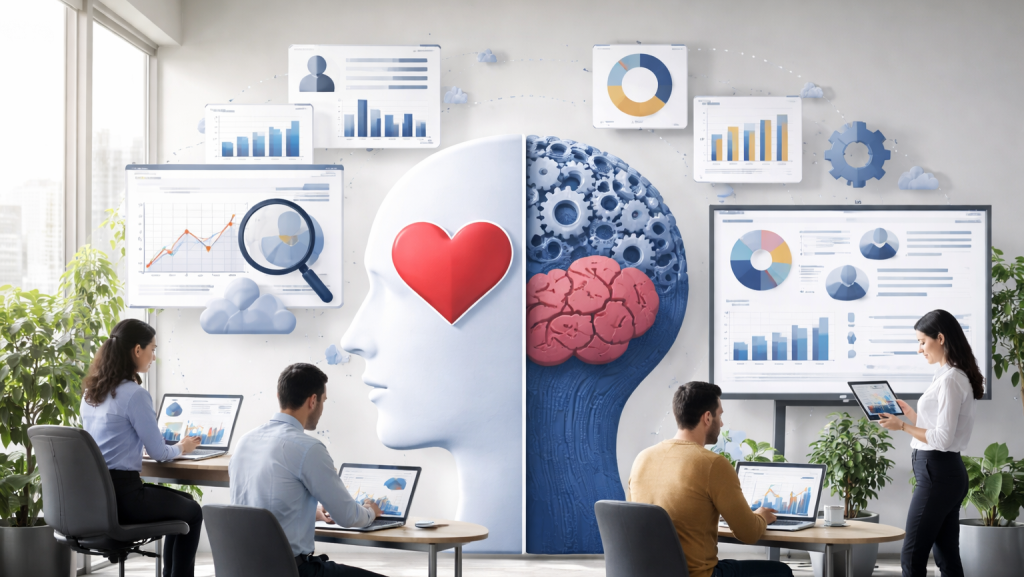
For years, HR has been known as the “heart” of an organization focused on people, culture, and relationships. Today, it is also becoming the brain. Welcome to the era of data-driven HR, where people analytics helps organizations shift from reactive problem-solving to proactive decision-making. Instead of asking, “Why did this employee leave?” leading companies are now asking, “How can we predict and prevent turnover before it happens?” What Is People Analytics? People analytics (also known as HR analytics or workforce analytics) is the practice of collecting and analyzing employee data to improve business decisions. This may include engagement scores, performance ratings, absenteeism trends, promotion timelines, compensation data, training participation, and exit feedback. The goal is not to reduce people to numbers. It’s to use data thoughtfully to improve employee experience and strengthen organizational strategy. Predicting Turnover Before It Happens Turnover is costly both ways: financially and culturally. Replacing an employee can cost anywhere from 30% to 200% of their salary, not to mention the disruption to morale and productivity. Predictive analytics allows HR teams to identify patterns that signal risk. For example: With these insights, HR can take proactive steps such as conducting stay interviews, offering career development opportunities, adjusting workloads, or reassessing compensation structures. The objective isn’t control, it’s support. Improving Performance with Real-Time Insights Traditional performance management often relies on annual reviews, which can delay meaningful feedback. People analytics enables continuous performance tracking and evidence-based decision-making. Organizations can: When data reveals that certain training programs consistently improve performance, those initiatives become strategic investments. When productivity dips align with workload imbalances, leaders can address structural issues instead of placing blame on individuals. Data shifts HR from assumptions to informed action. The Human Side of Data Data should enhance empathy not replace it. Employees want transparency, fairness, and privacy. To use people analytics responsibly, organizations must: Numbers tell part of the story. Conversations complete it. The Future Is Insight-Driven In today’s competitive labour market, intuition alone is no longer enough. Leaders expect HR to demonstrate measurable impact. Data-driven HR strengthens workforce planning, reduces turnover costs, increases engagement, and supports equitable decision-making. It positions HR not just as an administrative function, but as a strategic partner at the leadership table. The most successful organizations in 2026 and beyond will combine human-centered leadership with ethical data practices, continuous learning, and strategic workforce planning. People analytics does not replace the human element of HR, it strengthens it. When empathy is paired with evidence, organizations don’t just improve performance. They build workplaces where employees feel supported, valued, and motivated to grow. Because when HR combines insight with humanity, employees don’t just stay, they thrive. Written by: Vrushali Savalia, HR Assistant