

Your Employees Are Already Using AI. Does Your Business Have the Rules to Match?
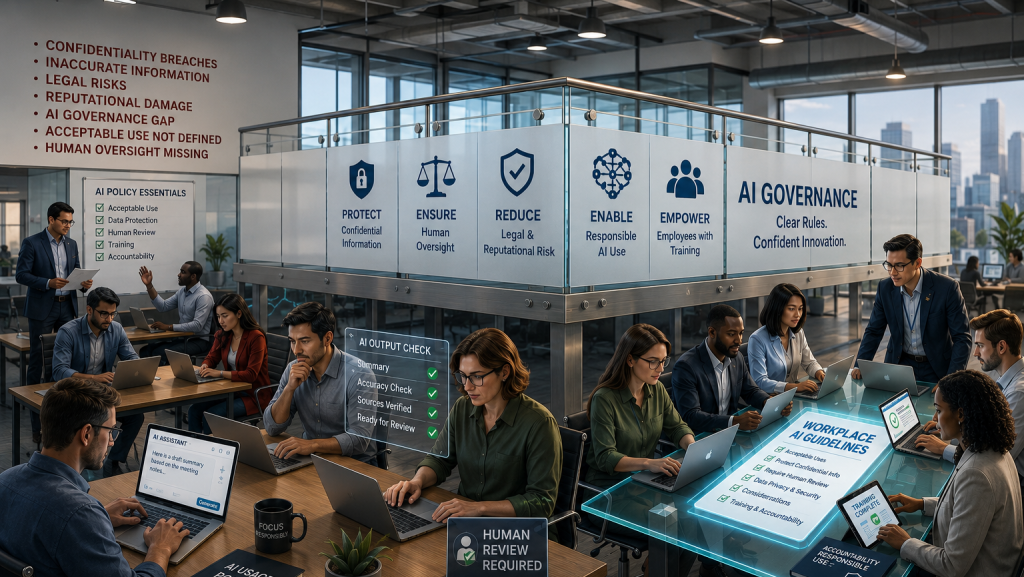
Artificial intelligence is no longer a futuristic concept—it’s already part of everyday business operations. Employees are using AI to draft emails, summarize meetings, create marketing content, analyze data, and even make operational decisions. For Canadian small and mid-sized businesses, the question is no longer whether AI will be used in the workplace. The question is whether it’s being used responsibly. Without clear governance, AI can expose organizations to confidentiality breaches, inaccurate information, legal risks, and reputational damage. Yet many businesses have invested in AI tools without establishing any guidelines for employees. That’s where HR plays a critical role. What Is AI Governance? AI governance refers to the policies, procedures, and accountability measures that ensure artificial intelligence is used ethically, securely, and in alignment with business objectives. For employers, effective AI governance isn’t about restricting innovation—it’s about creating guardrails that enable employees to use technology confidently and responsibly. A well-designed framework should address: These issues affect businesses of every size, not just large enterprises. Why Small Businesses Are Especially Vulnerable Unlike large organizations with dedicated legal, IT, and compliance teams, many small businesses rely on informal processes and lean staffing models. Employees often adopt new technology independently, creating inconsistency and risk. For example: Without governance, these situations can escalate quickly. AI Governance Is an HR Issue Many organizations assume AI oversight belongs solely to IT. In reality, HR has a central role in shaping how employees use technology. Policies should establish expectations for responsible use, while onboarding and training should reinforce those standards. Performance management processes should also address misuse where appropriate, ensuring accountability across the organization. HR professionals can also help leaders evaluate whether AI tools align with workplace values, privacy obligations, and organizational culture. Practical Steps Employers Can Take Today If your business has not yet developed an AI governance strategy, consider starting with these five actions: These simple measures can significantly reduce risk while allowing employees to benefit from productivity gains. How Outsourced HR Can Help For many small and mid-sized businesses, developing governance policies from scratch can feel overwhelming. An outsourced HR partner can bridge that gap by creating practical, business-focused frameworks that support innovation while protecting the organization. From drafting AI usage policies and updating employee handbooks to training managers and advising leadership teams, Bay Street HR can help ensure programs are implemented responsibly—not reactively. The Bottom Line Artificial intelligence is changing the way businesses operate, but governance should evolve alongside technology. Organizations that establish clear expectations today will be better positioned to protect their people, safeguard sensitive information, and maintain the trust of clients and employees alike. AI doesn’t replace sound judgment—it amplifies the importance of it. And with the right governance framework in place, businesses can embrace innovation with confidence instead of uncertainty. Written by: Tiffany Leung, Partner, Consultant